
BMW 230i 0–60 Times
The BMW 230i 0–60 times and quarter-mile times below are from 5 recorded performance tests sourced from reputable automotive resources such as Car and Driver and Motor Trend and more.
The fastest tested BMW 230i is the 2022 BMW 230i Coupe (M Sport), which went from 0 to 60 mph in 5.10 seconds, reaching the ¼ mile in 13.70 seconds at 101.0 mph, according to Car and Driver.
The slowest tested BMW 230i is the 2017 BMW 230i Coupe (Sport), which took 5.80 seconds to reach 60 mph, running the ¼ mile in 14.40 seconds at 96.4 mph, according to Motor Trend.
Out of all the BMW 230i tests in our database, the average 0–60 mph time is 5.42 seconds. The average quarter-mile time is 13.98 seconds at 99.62 mph.
Fastest 0–60
5.10sec
2022 Coupe (M Sport)
Average 0–60
5.42sec
Across 5 runs
Avg ¼ Mile
13.98sec
@ 99.6 mph trap
Slowest 0–60
5.80sec
2017 Coupe (Sport)
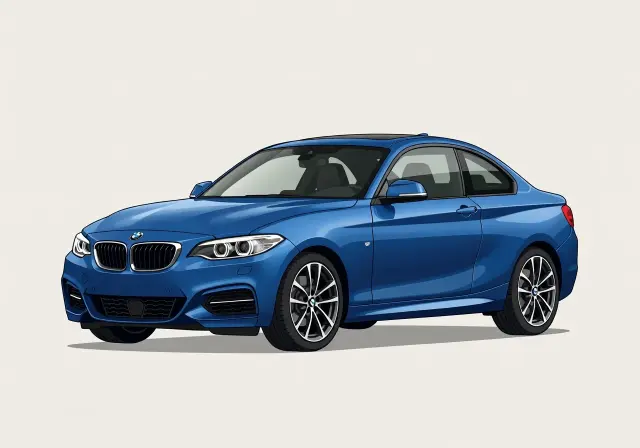
Across 5 verified runs, the BMW 230i ranges from 5.10 to 5.80 seconds 0–60, with a 5.42-second average.
01 /
BMW 230i Performance Overview
BMW’s 230i performance record spans 2017 to 2022 in this dataset, covering 5 verified tests across the F22/F23 and G42/G43 eras. Throughout that period, the car stayed focused on a turbocharged 2.0-liter gasoline four-cylinder, using B46-series engines and moving from 248 hp in earlier cars to 255 hp in the latest generation. Early results established the baseline with the 2017 Coupe (Sport) at 5.8 seconds to 60 mph, while the 2017 xDrive Coupe (Sport) lowered that to 5.3 seconds as the quickest F22/F23 result.
That first generation’s tested range showed the effect of trim and driveline rather than major power changes, with quarter-mile results clustering around the high-13- to low-14-second bracket. The major step came with the 2022 G42/G43 redesign, which improved both launch and overall acceleration. In current data, the 2022 Coupe (M Sport) is the quickest 230i tested, reaching 60 mph in 5.1 seconds and running the quarter-mile in 13.7 seconds at 101 mph. Another 2022 Coupe (M Sport) test returned 5.2 seconds to 60 mph, placing the present-generation average at 5.2 seconds and leaving the 230i today at the quickest point yet recorded in this sample.
02 /
BMW 230i 0–60 by generation
2 generations| Generation | Years | Avg 0–60 | Fastest 0–60 | Tests | Notes |
|---|---|---|---|---|---|
| G42/G43 | 2022–present | 5.20s | 5.10s — 2022 Coupe (M Sport) | 2 | The G42/G43 generation (2022–present) averaged 5.20 seconds to 60 mph across 2 tests, led by the 2022 Coupe (M Sport) at 5.10 seconds. Output was 255 hp across 2.0L Turbo I-4 configurations. |
| F22/F23 | 2014–2021 | 5.57s | 5.30s — 2017 xDrive Coupe (Sport) | 3 | The F22/F23 generation (2014–2021) averaged 5.57 seconds to 60 mph across 3 tests, led by the 2017 xDrive Coupe (Sport) at 5.30 seconds. Output was 248 hp across 2.0L Turbo I-4 configurations. |
G42/G43
2022–present
Avg 0–60
5.20s
Fastest
5.10s
Tests
2
2022 Coupe (M Sport)
The G42/G43 generation (2022–present) averaged 5.20 seconds to 60 mph across 2 tests, led by the 2022 Coupe (M Sport) at 5.10 seconds. Output was 255 hp across 2.0L Turbo I-4 configurations.
F22/F23
2014–2021
Avg 0–60
5.57s
Fastest
5.30s
Tests
3
2017 xDrive Coupe (Sport)
The F22/F23 generation (2014–2021) averaged 5.57 seconds to 60 mph across 3 tests, led by the 2017 xDrive Coupe (Sport) at 5.30 seconds. Output was 248 hp across 2.0L Turbo I-4 configurations.
03 /
BMW 230i 0–60 times by model year
5 tests · 3 years
▾
2022 BMW 230i
2 verified runs
Avg 0–60
5.20
sec
Avg ¼ Mile
13.80
sec
Recorded Tests
2
#01
2022 BMW 230i Coupe (M Sport)
5.10sec 0–60
0.0s · 0mph
0.0s · 0mph
13.70s
¼ mi @ 101.0 mph
▾
- 0–60 mph
- 5.10 sec
- ¼ Mile ET
- 13.70 sec
- Trap Speed
- 101.0 mph
- Engine
- 2.0L Turbo I-4
- Drivetrain
- RWD
- Transmission
- 8A
- MPG EPA
- 26 C / 35 H
- Production Vehicle
- Body Type
- Coupe
- Powertrain
- Gasoline
- Test Source
- Car and Driver
- Overall Rank
- #1 of 5
#02
2022 BMW 230i Coupe (M Sport)
5.30sec 0–60
0.0s · 0mph
0.0s · 0mph
13.90s
¼ mi @ 100.7 mph
▾
- 0–60 mph
- 5.30 sec
- ¼ Mile ET
- 13.90 sec
- Trap Speed
- 100.7 mph
- Engine
- 2.0L Turbo I-4
- Drivetrain
- RWD
- Transmission
- 8A
- MPG EPA
- 26 C / 35 H
- Production Vehicle
- Body Type
- Coupe
- Powertrain
- Gasoline
- Test Source
- Motor Trend
- Overall Rank
- #2 of 5
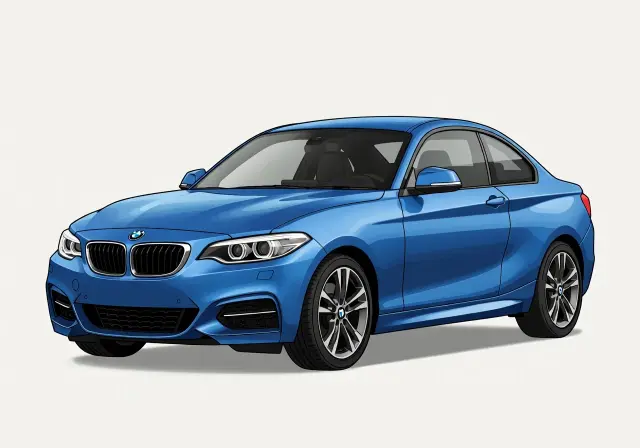
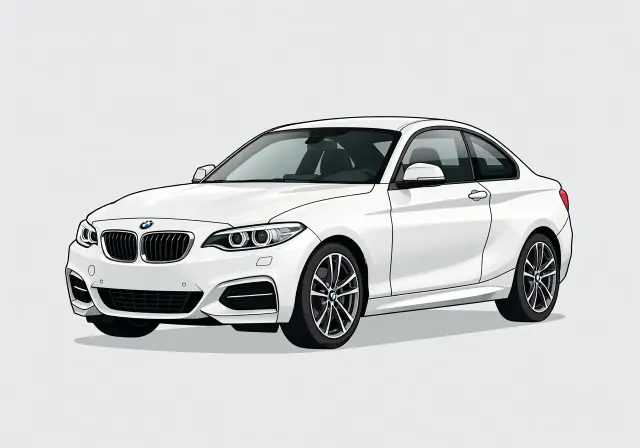
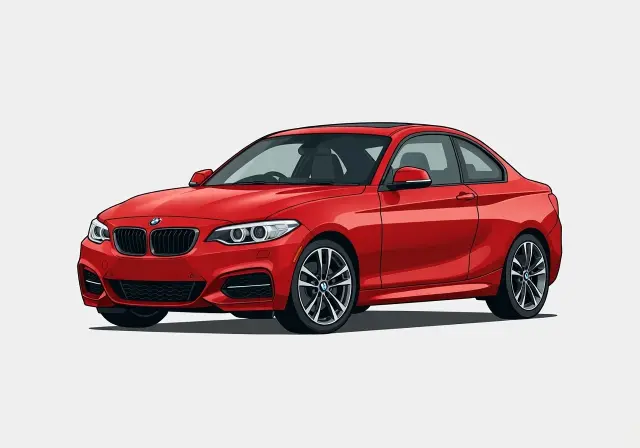
How we verify BMW 230i performance data
We include only independently published road-test results from automotive publications. Manufacturer-claimed 0–60 times are excluded unless clearly labeled. When multiple publications test the same BMW 230i trim, each run is listed separately — weather, tires, surface, rollout, and instrumentation all affect results.
04 /
BMW 230i 0–60 and quarter-mile distribution
0–60 vs ¼ mile · lower-left is fasterEach dot is a recorded test run
0–60 →
¼ mile →
Fastest
Recorded run
Slowest
05 /
BMW 230i performance FAQs
10 questions
The 2022 BMW 230i reaches 60 mph in 5.1 to 5.3 seconds across recorded stock tests for the Coupe (M Sport). The quickest 2022 run is 5.1 seconds. Those tests also show quarter-mile times of 13.7 to 13.9 seconds, with trap speeds from 100.7 to 101 mph.
The quickest BMW 230i on record is the 2022 Coupe (M Sport), which ran 0-60 mph in 5.1 seconds. That same configuration also posts the best quarter-mile result for the model at 13.7 seconds at 101 mph. Across all 5 verified 230i tests, 5.1 seconds is the benchmark to beat.
The fastest stock BMW 230i is the 2022 Coupe (M Sport) at 5.1 seconds from 0-60 mph. All 5 recorded 230i tests are production vehicles, so the fastest overall result is also the fastest stock result. Its best quarter-mile pass is 13.7 seconds at 101 mph.
Across 5 recorded BMW 230i tests, the average 0-60 mph time is 5.42 seconds. Average quarter-mile performance is 13.98 seconds at 99.6 mph. The quickest run is 5.1 seconds, while the slowest recorded 0-60 time is 5.8 seconds, showing a fairly tight spread across trims and generations.
The G42/G43-generation BMW 230i averages 5.2 seconds from 0-60 mph across 2 tests. Its quickest recorded run is 5.1 seconds from the 2022 Coupe (M Sport). Power is listed at 255 hp, and every recorded G42/G43 230i test uses a turbocharged gasoline powertrain.
The F22/F23-generation BMW 230i averages 5.57 seconds from 0-60 mph across 3 tests. The quickest F22/F23 result is 5.3 seconds from the 2017 xDrive Coupe (Sport). Recorded output for this generation is 248 hp, with turbocharged gasoline power across all tested examples.
The fastest G42/G43 BMW 230i on record is the 2022 Coupe (M Sport) with a 0-60 mph time of 5.1 seconds. That also makes it the quickest 230i overall. In quarter-mile testing, the same trim has run as quick as 13.7 seconds at 101 mph.
The Coupe (M Sport) is quicker. Across 2 tests, the Coupe (M Sport) averages 5.2 seconds to 60 mph and has a best run of 5.1 seconds. Across 2 tests, the Coupe (Sport) averages 5.7 seconds and has a best of 5.6 seconds. That gives the M Sport a clear edge in recorded acceleration.
The xDrive Coupe (Sport) is quicker in the recorded results. Its only test shows 0-60 mph in 5.3 seconds. The rear-drive Coupe (Sport) averages 5.7 seconds across 2 tests, with a best of 5.6 seconds. On record, the xDrive car holds a 0.3-second advantage over the best Coupe (Sport) run.
The BMW 230i averages 13.98 seconds in the quarter-mile at 99.6 mph across 5 tests. The quickest quarter-mile result is 13.7 seconds at 101 mph from the 2022 Coupe (M Sport). Current-year 2022 examples run between 13.7 and 13.9 seconds, trapping from 100.7 to 101 mph.
Sources
Car and Driver
Motor Trend
0–60 and quarter-mile times vary with driver, weather, tire temperature, and wear. We collect every verified run we can find — so you see the range of what a BMW 230i can do, not a single marketing claim.
06 /
Other BMW 0–60 times
07 /
Are we missing a performance test for BMW 230i?
Log in to suggest a missing test.